


Spring {AC|Air Conditioning|Air Conditioner} {Maintenance|Tune-Up} Checklist: {What to Do|Steps to Take|Things to Do} Before Turning on Your AC
{Spring is here|The spring season is here|Springtime has arrived}, and {warmer days|hotter temperatures|hot summer days} {are right around the corner|are coming soon|will be here before you know it}. Before you {make|start|begin} that first AC run of the season, it’s {smart|essential|a good idea} to take a {little time|few moments| to get your {AC|air conditioner} ready. {Learning|Knowing} how to prepare your AC for summer can help you {avoid|prevent|steer clear of} surprise breakdowns, {lower|reduce your home’s|cut down on} energy bills and keep your home consistently {comfortable|pleasant|cool} all summer. {Performing|Completing|Taking time to complete} a spring AC maintenance checklist now can {save you|help you save|save a lot of} money and stress later.
The {good news|best part}? There are {plenty of|many|several} simple steps you can {take|do|handle all} on your own. Here, the {pros|cooling specialists|professionals} at Strategic America have {put together|created} {a helpful|a step-by-step|an easy-to-follow} spring AC maintenance checklist for Des Moines homeowners like you. We’ll {walk you through|guide you through|go over} {what to do|steps to take}, {why it matters|how it helps your AC|the benefits of each step} and when it’s time to {call in|bring in|reach out to|hand the reins over to} a professional.
{Why Spring AC Maintenance Matters|Why AC Spring Maintenance Is Important|The Importance of Spring AC Maintenance|Benefits of Spring AC Maintenance}
Taking care of your AC in the spring helps {prevent|avoid|reduce the chance of} costly repairs and {improves|boosts your home’s} energy efficiency, which {can|really helps} {lower|reduce|bring down} your monthly cooling bills. It also {extends|increases|is a good way to lengthen} the life of your {HVAC|air conditioning|cooling} system and helps it run more {reliably|dependably|consistently}. Plus, it’s a {good|satisfying|great|nice} feeling knowing you’ve done everything you can to make sure your {AC|air conditioner|air conditioning} will keep your home {comfortable|refreshing} and cool when summer heat {arrives|sets in|hits}.
These {tasks|AC maintenance tips} may seem {pretty|fairly|quite} {straightforward|simple}, but the truth is even these small steps really {pay off|make a difference|deliver results}.
{Your Spring AC Maintenance Checklist|The AC Spring Prep Checklist|Spring AC Maintenance Checklist for Your Home}
Getting your {cooling system|home cooling system|home HVAC} ready for {summer|hot summer days|the summer weather} doesn’t have to be {complicated|difficult|hard}. This air conditioner maintenance checklist {includes|features} {simple|easy|DIY} tasks you can {do|handle} {yourself|on your own|without calling for a pro}.
Indoor AC Maintenance {Tasks|Steps|Chores}
- {Check|Inspect|Replace} your {air conditioner’s|HVAC system’s|AC} air filter. If it’s {dirty|clogged|grimy}, {change|swap out|replace} the AC filter. How often {depends|you need to replace it will depend|will vary based} on your {household|home|living situation}. {Most|The majority of|Many} homes need a new {one|air filter} every 60-90 days, but those with pets or {residents|household members} with {special health needs|health conditions|certain health conditions|breathing issues} may need to change it more {often|frequently} to boost indoor air quality. According to the U.S. Department of Energy, replacing a clogged {AC|air conditioning|air conditioner} air filter can {lower|reduce|decrease} your AC’s energy {consumption|use} by up to 5–15%*/.
- {Check|Review your|Double check the} thermostat settings. {Make sure|Confirm|Be sure} your thermostat is set to “cool,” so your HVAC is in the right mode, and is set at a {comfortable|pleasant|ideal} temperature. If your thermostat is {outdated|older|aging}, consider {upgrading to|replacing it with} a programmable or smart {model|thermostat}. {These can|More advanced models} automatically adjust temperatures and {improve|increase} efficiency, helping you {save|conserve} money without {sacrificing|compromising your} comfort.
- {Inspect|Check|Check your home’s air} vents and registers. {Walk through your home to|Go through the rooms in your home to|Take the time to} {check|inspect|verify} that vents and registers are {open and unobstructed|unblocked and clear|clear of obstructions like furniture, rugs or curtains}. {Proper|Good|Adequate} airflow helps your system {cool|chill|maintain lower temperature} {evenly|consistently|uniformly} and prevents unnecessary strain. Even {partially blocked|slightly obstructed|slightly blocked} vents can reduce efficiency, wear out your {AC|air conditioner|AC unit} by making it work harder to cool your home and {allow|cause} some rooms to heat up in hot weather.
Outdoor {AC Unit|Air Conditioning Unit|AC System} {Checklist|Prep List|Maintenance Checklist}
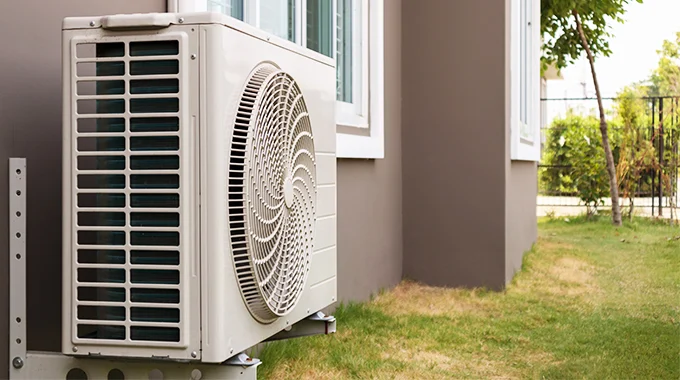
- {Clear|Remove|Clear away} debris around the unit. {Remove|Clear away|Get rid of} leaves, dirt and grass clippings {from around|that are on or around|that have blown or piled up next to} your outdoor condenser. {Debris|Built-up debris|Yard debris} can {block|restrict|limit} airflow and {reduce|lower|decrease} efficiency. Keeping {the area clean|the area clear|things clear} helps your system {release heat properly|dissipate heat effectively|expel heat as it should}, which is {key|essential|important} to effective cooling.
- {Trim|Cut|Prune back} vegetation {around|close to} your outdoor {AC|air conditioning} unit. {Cut back|Trim|Remove or trim back} plants, shrubs or weeds {so there’s|to allow|to create} {at least 2–3 feet of open space|an approximately 2-3-foot buffer} around the unit. {This|Doing this|That} allows {proper|adequate|sufficient} airflow, {improved|boosted|increased} cooling efficiency and helps {prevent|avoid|reduce the risk of} overheating and breaking down.
- {Gently|Carefully} clean condenser coils. {Use|Take|Grab} a hose (set on a gentle setting) to {rinse off|wash away|clear off} dirt from the coils. {Knowing|Understanding|Learning} how to clean your AC unit outside helps {keep the coild|maintain the coils so they are|ensure the coils are} {clean|free of buildup|clear}, so they can {transfer|move|release} heat more effectively and prevents damage to your compressor. The US Department of Energy notes that dirty coils can {increase|raise|boost} energy use and {reduce|lower|decrease} cooling capacity, so a {quick rinse|simple rinse|light rinse} can make a {noticeable|clear|measurable} difference.
- {Check|Look} for {visible|signs of|any exterior} damage. {Look|Check|Keep an eye out} for {bent|damaged} fins, loose panels or {signs of wear|visible wear|damage indicators} on the outdoor {AC|air conditioning} unit. {Catching|Identifying|Spotting} small issues early can {prevent|avoid|help prevent} bigger, more expensive repairs later. If {anything looks off or damaged|you notice anything unusual|something appears damaged}, it’s {a good idea|best|recommended} to {call|contact|reach out to} a professional for inspection and possible repair.
{Once you’ve worked through|After you’ve completed|When you’ve finished} the AC maintenance checklist, it’s {time|important|a good idea} to make sure everything is running {properly|correctly|as it should}.
{Here are|Below are|Follow these} step-by-step directions for {testing|checking|checking the performance of} your AC.
- {Turn system on and test|Start your AC and check|Switch on the system on and test} cooling. {Set your thermostat|Adjust your thermostat|Change your thermostat setting} to cool and {lower|reduce|bring down} the temperature. This {will confirm|allows you to confirm|is a way to check that} your system {starts up|turns on|kicks on} and is {producing|blowing|delivering} cool air.
- {Listen for unusual noises|Pay attention for strange sounds|Check for unusual noises}. {Pay attention to|Listen for|Be aware of any} banging, rattling or squealing sounds. This {can signal| often indicates|is a sign of} loose or {worn|wearing out|broken} parts.
- {Check airflow strength|Test airflow strength|Evaluate airflow}. {Feel|Place your hand near vents and feel|Check} the air coming from vents. {Strong, steady air flowing from the vents|Consistent, strong airflow|Steady, powerful airflow} means your {system|AC|air conditioning} is working {efficiently|properly|as intended}.
- {Monitor for strange odors|Check for unusual smells|Be aware of strange odors}. {Pay attention for|Be on the alert for|Take note of} any musty or burning smells. {These can indicate|These may signal|This often points to} {problems like|potentially dangerous} mold, dust buildup or electrical issues.
{When to Call|Signs It’s Time to Call|When You Should Contact} {a Professional|An HVAC Professional|a Pro|Professional Help}
{While some air conditioning maintenance is DIY-friendly|Although you can do some AC maintenance yourself|While certain AC maintenance tasks are DIY-friendly}, {certain|more serious} problems should {always be handled|be addressed|be taken care of} by a professional. {Acting early by calling for|Addressing issues early with prompt|Being proactive by requesting} AC repair {at the first sign of problems|as soon as you notice something amiss|right away} can help you {avoid|prevent|reduce the risk of} bigger, more expensive issues {down the line|later on|in the future}.
• {AC|Air conditioner|AC unit} won’t {turn on|start|start up}. If your air conditioner is not working after winter, it may {be due to electrical faults|have electrical issues|have wiring problems}, a failed capacitor or a locked-up compressor. {Ignoring it or repeatedly trying to start it|Continuing to try turning it on|Repeatedly attempting to start it} can {cause|lead to|result in} further damage and {increase|raise|drive up} repair costs.
• {Weak|Low|Poor} airflow. If {your AC has weak airflow|your AC is barely blowing any air|your air conditioner doesn’t have sufficient airflow}, {you|it} may have duct issues, {motor problems|something wrong with the motor|a failing motor} or blockages. {This can cause|It can lead to|This may result in} uneven cooling, higher {utility|cooling|monthly AC} bills and long-term strain that {shortens|reduces|decreases} your system’s lifespan.
• {AC blowing warm air instead of cool|Warm air coming from your AC|AC not blowing cool air }. {Warm air coming from your AC can mean|If your AC is blowing warm air, it could be facing|When your system blows warm air, it can be a sign of} {refrigerant loss|low refrigerant|refrigerant level issues} or compressor trouble. {Running your air conditioner in this condition|Continuing to run your system|Operating your AC under these conditions} can {overwork|strain|overload} the system, leading to the {evaporator coils freezing|frozen evaporator coils} and potential system shutdown.
• {Strange noises or smells|Unusual sounds or odors|Odd noises or smells}. {Unusual sounds like rattling or grinding|Rattling or grinding noises|Odd sounds like rattling or grinding} can signal parts coming loose or wearing out. {Odors coming from your air conditioner|Strange smells from your AC|Unusual odors from your system} may indicate mold growth or overheating electrical components, both of which can {worsen quickly|escalate fast|get worse rapidly} and {impact safety or air quality|be potentially dangerous|be safety hazards}.
• {System not turning on|AC not turning on|Unit won’t turn on|AC Won’t Start}. {If your AC won’t turn on at all|If your cooling system won’t start at all|If your air conditioner won’t power on} and you’ve already {checked|confirmed} the thermostat batteries and settings, {it could|there may} be a thermostat {issue|problem}, {wiring failure|faulty wiring} or a damaged control board. {Those problems require|These issues need|These types of problems call for} specialized tools and training to fix.
• {Refrigerant leaks or electrical concerns|Refrigerant leaks or electrical issues|Concerns with leaking refrigerant or electrical problems}. {Refrigerant leaks|Leaks in refrigerant lines|Low refrigerant levels caused by leaks} can cause ice buildup on coils, reduced cooling and eventual compressor damage. {Electrical issues|Electrical problems|Wiring issues} can lead to system shorts, repeated breaker trips or even fire risks, making professional AC service {essential|necessary|important}.
{Benefits of Scheduling a Spring AC Tune-Up|Why Schedule a Spring AC Tune-Up|Advantages of a Spring AC Tune-Up}
{Once you’ve completed|After finishing|When you’ve completed} your DIY AC tune-up checklist, scheduling HVAC spring maintenance from {a professional|an HVAC specialist|a heating and cooling specialist|qualified professional} is a {smart|wise|good} next step.
A {cooling technician|HVAC technician|trained professional} uses years of knowledge and specialized equipment to {inspect|check|evaluate}, clean and optimize your {system|cooling system|air conditioning equipment}. {This improves efficiency|A yearly tune-up helps improve AC efficiency|Seasonal AC maintenance boosts system efficiency}, helps {lower|reduce|cut down} monthly cooling costs and {catches|identifies|finds} issues early before they become major {repairs|problems|breakdowns}. It can also {help maintain|support|protect} your warranty and {extend|prolong|increase} the life of your equipment.
{Just like the steps you take at home|Just like your DIY cooling maintenance efforts |Like your DIY efforts}, calling a pro for annual AC maintenance services is a {simple|easy}, cost-effective move that {pays off|delivers value|makes a difference} in real ways. Even better, at Strategic America we also {offer|provide|have} protection plans to make AC tune-up services even {easier|more convenient|simpler} and more affordable. Learn more about our protection plans.
{Don’t Wait Until the First Heatwave|Schedule Service Before the Summer Heat|Don’t Get Swept Aside by the Summer Rush}
{Now is the best time|This is the time|There’s no better time than now} to schedule Strategic America’s professional AC maintenance in Des Moines. It’ll help you stay {comfortable|cool in the summer heat|nice and cool}, {lower|reduce|bring down} your energy bills and {feel confident|have peace of mind|stay confident} that your AC is ready for {whatever summer brings|the demands of summer weather|hot summer weather}. If your {system|cooling system|HVAC system|air conditioner} is {aging or not|getting older and not|requires frequent repairs or isn’t} performing {well|properly|as it should}, we can also {walk you through|guide you through|help you explore} AC replacement options so you can {plan ahead|prepare early|make informed decisions} without pressure.
{Scheduling early|Booking now before summer hits|Booking your appointment in the spring} helps you avoid the seasonal rush, when {temperatures rise|the days get hot|summer temperatures climb} and AC systems across the area start {breaking down|failing and needing repair|to break down and need repair}.
Contact us today online or call 123-123-1234 to {schedule|book|schedule an appointment for} proactive AC service in Des Moines and {stay ahead of|get ahead of|be prepared for} the summer heat.
Jump To...